
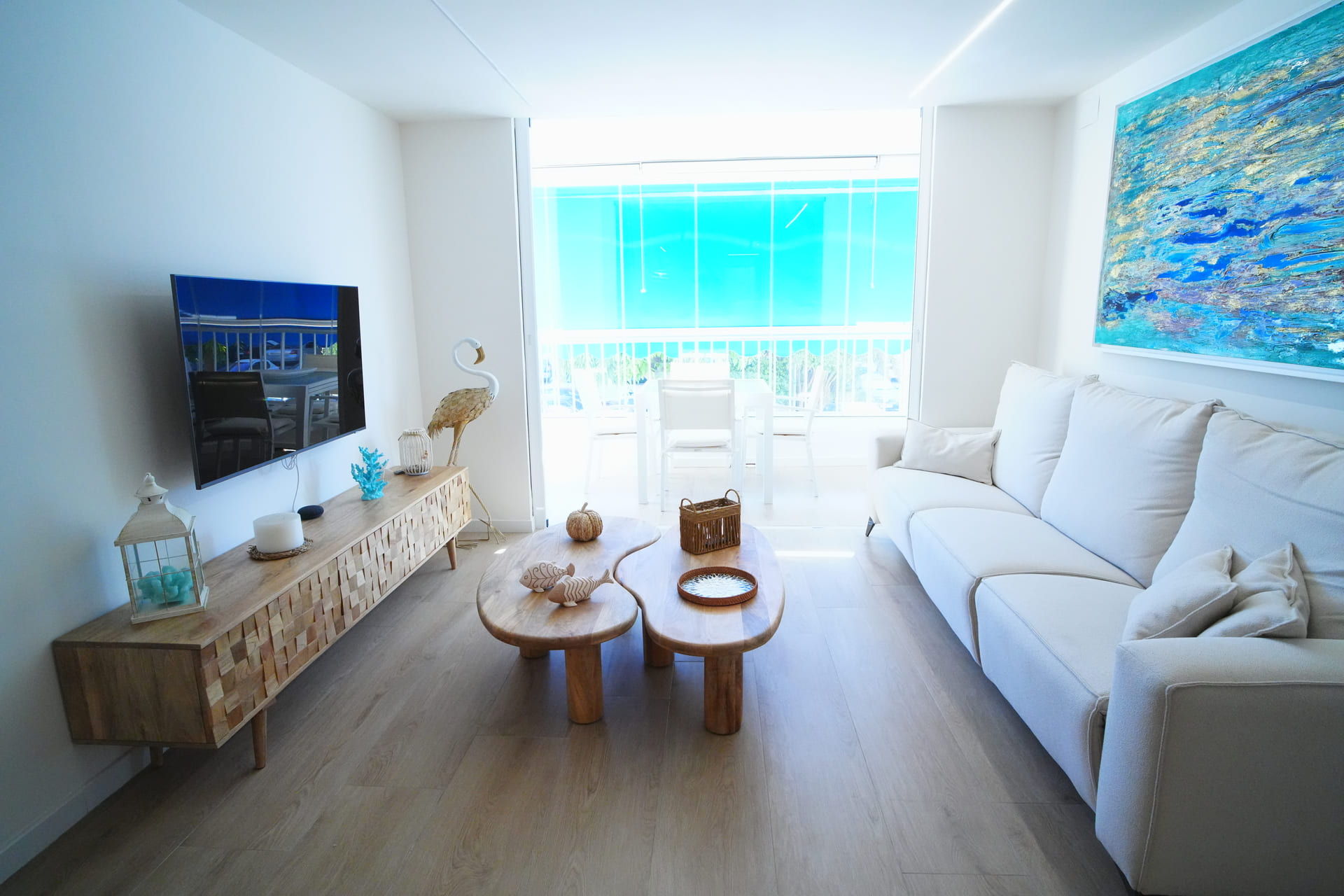
In the world of renovations and interior design, there is a constant temptation: letting ourselves be guided by what looks good. Magazines, social media and spectacular renders push us to make decisions based purely on aesthetics. The problem appears when that aesthetic is not properly thought through for the real use of the space. At Hausvetica we see it often: very beautiful homes… but uncomfortable to live in.
This article is not about choosing between beautiful or practical, but about understanding what happens when that balance is broken.
When design takes over everyday life
A space can be visually striking and still fail miserably in terms of function. Kitchens with cabinets that offer no real storage capacity, minimalist bathrooms where there is no room even for a towel, or beautiful living rooms with poor lighting are common examples.
The problem usually does not show up on the first day. It appears with daily use. Opening an awkward cupboard, not finding power sockets where you need them, or having to dodge furniture every time you walk through the room ends up generating frustration. What began as an exciting renovation turns into a source of constant small annoyances.
Spaces that do not adapt to people
A home should adapt to the people who live in it, not the other way around. When aesthetics are prioritised without analysing habits, routines and needs, the result is usually an inflexible space.
Growing families, people who work from home, holiday homes with heavy summer use — each context requires specific functional solutions. Ignoring this in order to follow a trend can cause the space to age badly or become obsolete very quickly.
Technical problems hidden behind what looks good
Another significant risk is technical. Sometimes the obsession with the final finish leads to poor construction decisions. For example, hiding installations without considering maintenance, choosing delicate materials for high-use areas, or forcing layouts that complicate ventilation or natural light.
In the short term, everything looks perfect. In the medium term, damp issues, noise, overheating or unnecessarily high energy consumption appear. And then it is time to renovate again what, in theory, was already done.
False minimalism and its consequences
Poorly understood minimalism is one of the main culprits. Overly stripped-back spaces, with insufficient storage and rigid solutions, often respond more to a photograph than to a way of living.
A home is not a showroom. It needs space to store things, to move comfortably and to adapt to different situations. When everything is removed in the name of aesthetics, functionality is usually the main sacrifice.
Aesthetics without functionality are a passing trend
Trends change; functionality does not. What looks modern today may feel outdated in a few years, but good layouts, well-planned lighting or durable materials continue to work over time.
When a renovation is based solely on aesthetics, it runs the risk of becoming outdated quickly. By contrast, when the functional foundation is solid, the aesthetic can be updated with small changes without the need for major works.
Balance as the key to good design
True quality in a renovation appears when aesthetics and functionality work together. A well-designed space is one that looks good, works even better and stands the test of time.
This means analysing how the home is lived in, anticipating future problems and making conscious, not impulsive, decisions. Aesthetics should be the result of good planning, not its starting point.
Renovating with a vision beyond the photo
Before deciding on a design, it is worth asking simple but crucial questions. How will this space be used? Is it easy to clean and maintain? Will this material age well? Does it respond to my real needs or just to a trend?
Ultimately, prioritising aesthetics over functionality usually comes at a cost. The good news is that you do not have to give up either. The true success of a renovation lies in knowing how to combine them with judgement, experience and a long-term vision.