
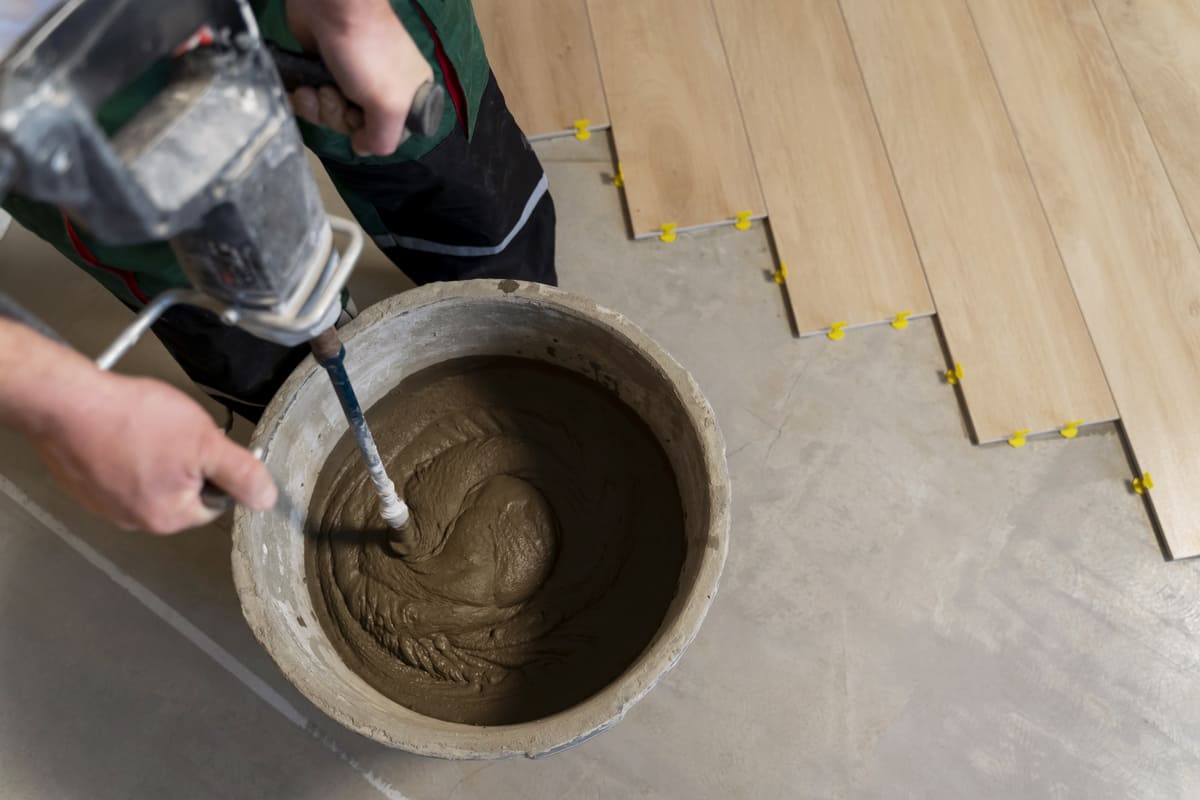
Few decisions in a renovation have as much impact as the floor. It’s the first thing you step on when you enter, what visually unifies the entire house, and, if chosen poorly, the most expensive to correct. Yet, it remains one of the most casually made decisions: “this porcelain looks nice” or “the parquet is warmer” without considering how well it withstands real usage, the climate, or the maintenance you’re willing to give it. This guide won’t sell you any materials. It will help you choose the one you really need based on your house, your life, and, if you live on the Costa Blanca, the environment that influences more than you might think.
Key factors before deciding: use, humidity, traffic, and style
Before falling in love with any sample in the store, ask yourself these four questions:
- How much traffic does the area get? It’s not the same as the entrance hall — where everyone enters with shoes, bags, and the wet dog — as the master bedroom. The material’s hardness and abrasion coefficient matters, a lot.
- Is there humidity? In bathrooms and kitchens, the answer is obvious. But in the Costa Blanca, you must add the ambient humidity of coastal areas, which especially affects organic materials like natural wood or low-quality laminates.
- Are there children, pets, or elderly people? Slip resistance stops being an aesthetic option and becomes a technical safety criterion.
- What style are you looking for and how much maintenance can you handle? Microcement in a living room looks spectacular, but it doesn’t tolerate neglect. Rectified porcelain is almost indestructible, but it can feel cold unless combined well with heating and décor.
The 6 most commonly used flooring types in renovations
Porcelain tile
The undisputed king of renovations in Alicante. Durable, waterproof, resistant to salt and UV radiation, compatible with underfloor heating, and offering an extensive aesthetic range (wood, stone, cement imitation…). Its weak point: in large formats, it can look visually cold unless heated with textiles and furniture. Estimated price: 25-60 €/m² for the material, installation extra.
Natural wood flooring
Unmatched warmth. The problem is that natural wood breathes with humidity: it expands, contracts, and in coastal areas without constant climate control, it can end up warping or cracking. If you choose this, ensure the installer understands the environmental conditions. Requires sanding and treatment every few years. Estimated price: 50-120 €/m².
Floating laminate or multi-layer wood flooring
The most balanced alternative to solid wood. High-quality multi-layer offers a much more stable dimensional performance than solid wood and a practically identical aesthetic. Basic laminated flooring, however, doesn’t tolerate humidity. Estimated price: 20-70 €/m² depending on quality.
Vinyl flooring (SPC or LVT)
The material that has grown the most in recent years, and rightly so. Completely waterproof, very impact-resistant, warm to the touch, silent, and with very convincing wood and stone imitations. Ideal for vacation apartment renovations on the Costa Blanca: withstands intensive use, humidity, and is easy to maintain. Estimated price: 20-50 €/m².
Microcement
The most sought-after option on Instagram and, when done right, one of the most elegant. Continuous, joint-free, with endless color and texture possibilities. However, it requires impeccable execution — an inexperienced installer is guaranteed to cause cracks — and regular sealing to maintain its appearance. Not suitable for a family with three children and a dog; it’s the right choice for a design home with adult use and care. Estimated price: 60-100 €/m² applied.
Hydraulic flooring
The grandmother’s floor that’s made a strong comeback. Its geometric patterns add immediate personality and character. Works very well in Mediterranean-style or eclectic entries, kitchens, and bathrooms. Requires regular sealing to avoid staining. Estimated price: 40-90 €/m².
What floor works best in each room?
| Room | First Option | Second Option | Discard |
|---|---|---|---|
| Living Room | Large format porcelain / Multi-layer | Vinyl SPC | Low-quality laminate |
| Kitchen | Anti-slip porcelain | Vinyl SPC | Natural wood |
| Bathroom | Porcelain / Sealed microcement | Vinyl | Wood, laminate |
| Bedroom | Multi-layer wood / Vinyl | Porcelain with heating | — |
| Entrance/Hall | Porcelain / Hydraulic | Vinyl | Untreated wood |
| Outdoor Terrace | Outdoor porcelain / Composite | — | Untreated wood, vinyl inside |
Flooring trends for 2026: What’s most seen
- Large rectified formats. Thin or nearly invisible joints dominate living rooms and bathrooms. The effect is continuity and spaciousness, highly sought after in medium-sized apartments where every visual trick counts.
- Wood in medium tones, neither too light nor too dark. Natural and smoked oak has displaced the washed white tones of recent years. They combine with clean-line furniture and warm neutral colors.
- Microcement in bathrooms. Especially in full bathroom renovations, where the spa effect is sought: the floor and walls have the same continuous finish, with indirect lighting. The result, when done well, justifies the investment.
- Vinyl SPC in vacation homes. Practicality rules. Owners of tourist rental apartments in Santa Pola, Guardamar, or Gran Alacant have adopted vinyl as the standard: it withstands any tenant, is easy to replace if damaged, and its aesthetic no longer has anything to envy from natural materials.
- Hydraulic flooring as an accent element. Not throughout the house, but in kitchens, bathrooms, or the entrance. A focal point of personality in an otherwise neutral project.
Choosing the right flooring is not just a matter of taste: it’s a technical decision that impacts comfort, maintenance, and your home’s value for decades. At Hausvetica, we advise on materials before each project because we know that a good floor, well installed, is the foundation of everything else.
Do you have questions about which floor fits best in your renovation? Write to us at info@hausvetica.com or call us at 614 140 865.